Surfaces Built to Carry Weight Permanently
Concrete Installation & Flatwork in Ripley for driveways, pole barn slabs, and agricultural pads that resist cracking under equipment loads and weather cycles
Concrete flatwork creates stable, level surfaces that support vehicle traffic, equipment storage, and structural loads without settling or breaking apart over time. Queen City Builders installs reinforced concrete slabs, driveways, and agricultural pads in Ripley using proper subgrade preparation, steel reinforcement, and finishing techniques that prevent premature cracking. You need surfaces that remain level under tractor weight, shed water without pooling, and hold up through freeze-thaw cycles that deteriorate poorly installed concrete within a few seasons.
Concrete installation begins with subgrade preparation, which involves compacting soil or gravel base material to create a stable foundation that won't settle unevenly. Forms are set to define edges and establish the finished elevation, and reinforcement is placed in the form of steel rebar or wire mesh to resist tensile stress that causes cracking. Concrete is poured, leveled, and finished to the specified surface texture, then cured under controlled conditions to reach full strength. Proper slope is built into the slab to direct water away from buildings or toward drainage points, and control joints are cut or formed to manage where cracking occurs if the slab shifts.
Request a detailed estimate to review slab thickness, reinforcement specifications, and site preparation requirements based on your intended use and soil conditions.
What Changes After Concrete Work Is Completed
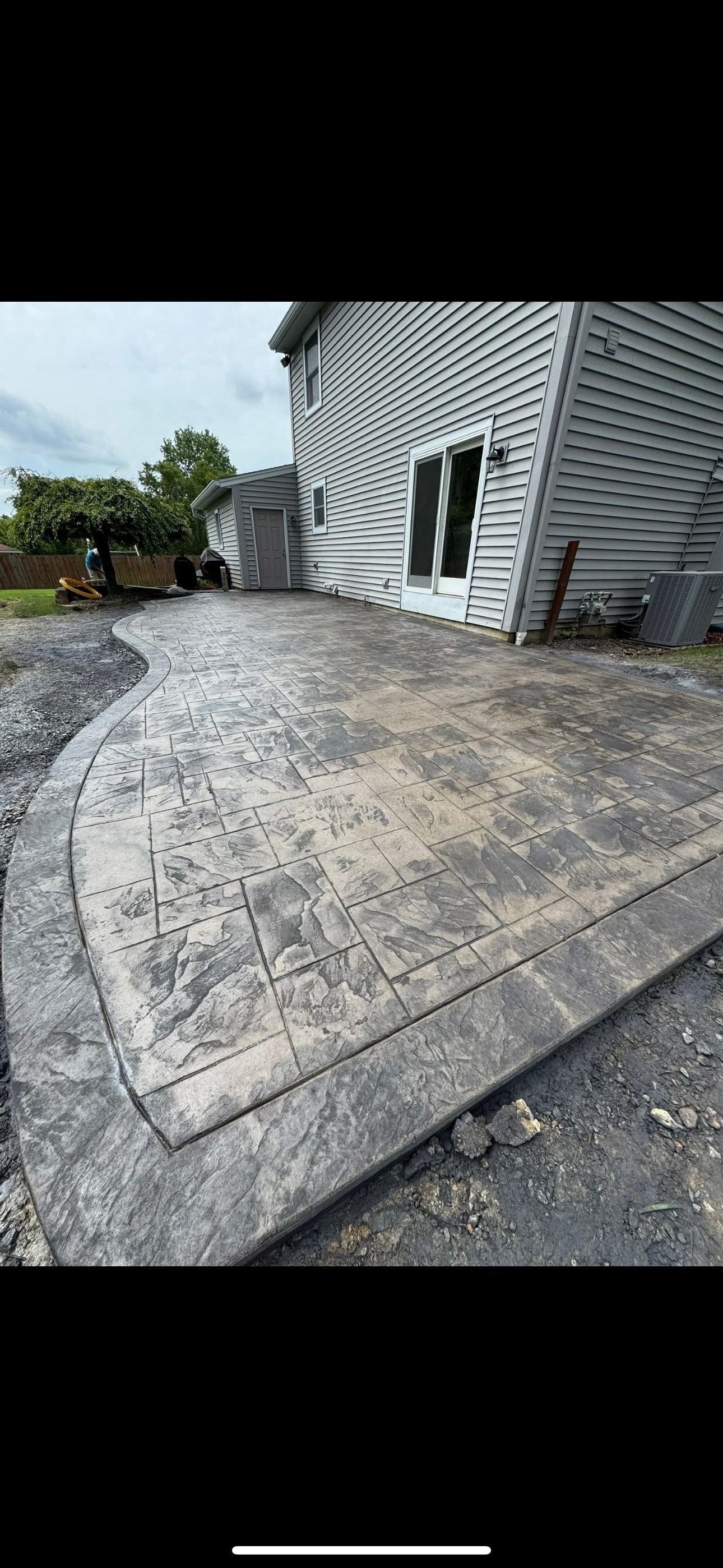
Concrete flatwork creates a clean, hard surface that eliminates mud, dust, and uneven ground where equipment operates or materials are stored. Reinforced slabs distribute weight evenly and resist cracking caused by ground movement or heavy loads, and the finished surface remains level and functional for decades when properly installed. Clean finishing produces a smooth, dense surface that resists moisture penetration and scaling from freeze-thaw exposure.
After the concrete cures, you'll notice a stable surface where vehicles and equipment can park or maneuver without sinking into soft ground or creating ruts. Water drains off the slab instead of pooling, and the surface stays clean and accessible in wet weather. Pole barn slabs provide a level floor for storage and workspace, and driveways remain firm and crack-free under daily traffic when the subgrade has been properly compacted and the slab thickness matches the expected load.
Agricultural concrete applications include feed lot pads, equipment washing areas, and storage slabs where drainage and durability matter more than aesthetic finish. Thickness and reinforcement are increased for areas that will support heavy equipment or repeated impact, and surface texture can be adjusted to provide traction in wet conditions or accommodate specific uses like livestock handling.
What Property Owners Usually Ask
Clients planning concrete flatwork in Ripley often ask about slab thickness, curing time, and how to prevent cracking in high-use areas before installation begins.
What thickness is required for a pole barn slab?
Residential pole barn slabs typically require four to six inches of thickness, but equipment storage or workshop use may require thicker slabs with heavier reinforcement. Agricultural applications with heavy machinery or repeated impact need six inches or more, depending on the equipment weight and frequency of use.
How long does concrete need to cure before use?
Concrete reaches sufficient strength for light foot traffic within 24 to 48 hours, but full curing takes approximately 28 days. Vehicle traffic and heavy equipment should be kept off the slab for at least seven days to prevent surface damage and cracking, and longer cure times are required in cold weather common to Ripley during late fall and winter months.
What prevents concrete from cracking over time?
Proper subgrade compaction, adequate slab thickness, steel reinforcement, and control joints all work together to prevent or control cracking. Control joints create intentional weak points where cracks form in straight lines rather than randomly across the slab, and reinforcement holds cracks tight so they don't widen or allow water infiltration.
Can concrete be poured in cold weather?
Cold weather slows curing and increases the risk of surface damage if the concrete freezes before it gains strength. Heated enclosures, insulating blankets, or accelerated mix designs are sometimes used for cold-weather pours, but scheduling concrete work during warmer months reduces complications and produces more reliable results.
What site preparation does concrete flatwork require?
The site must be cleared, graded, and compacted before forms are set. Gravel or crushed stone base material is often added to improve drainage and stability, and utilities or drainage lines that run under the slab must be installed before concrete is poured.
Queen City Builders handles concrete flatwork from subgrade preparation through final finishing, ensuring proper reinforcement and curing procedures are followed for long-lasting performance. Contact us to review your project scope and receive a detailed estimate based on slab size, thickness, and site conditions.