Buildings Designed for Decades of Real Use
Pole Barn Construction in Ripley for equipment storage, livestock shelters, and workshop space that handles daily agricultural demands
Queen City Builders constructs post-frame pole barns engineered to handle the weight, weather, and daily wear that comes with agricultural and commercial use in Ripley. You need structures that stay square under equipment loads, shed snow without strain, and resist wind pressure during Ohio storms. These buildings use wide-span layouts that eliminate interior support columns, giving you clear floor space for machinery, livestock movement, or workspace layout without obstruction.
Post-frame construction embeds vertical poles directly into the ground or concrete footings, transferring roof and snow loads straight down rather than relying on wall framing to carry weight. This approach allows for larger clear spans and faster construction while reducing material costs compared to conventional framing. The method works especially well for agricultural buildings where interior flexibility matters more than interior finishing, and where resisting lateral wind loads requires deep pole embedment rather than continuous foundation walls.
Schedule a site consultation to evaluate your property layout and discuss floor plan requirements specific to your intended use.
What Proper Post-Frame Construction Requires
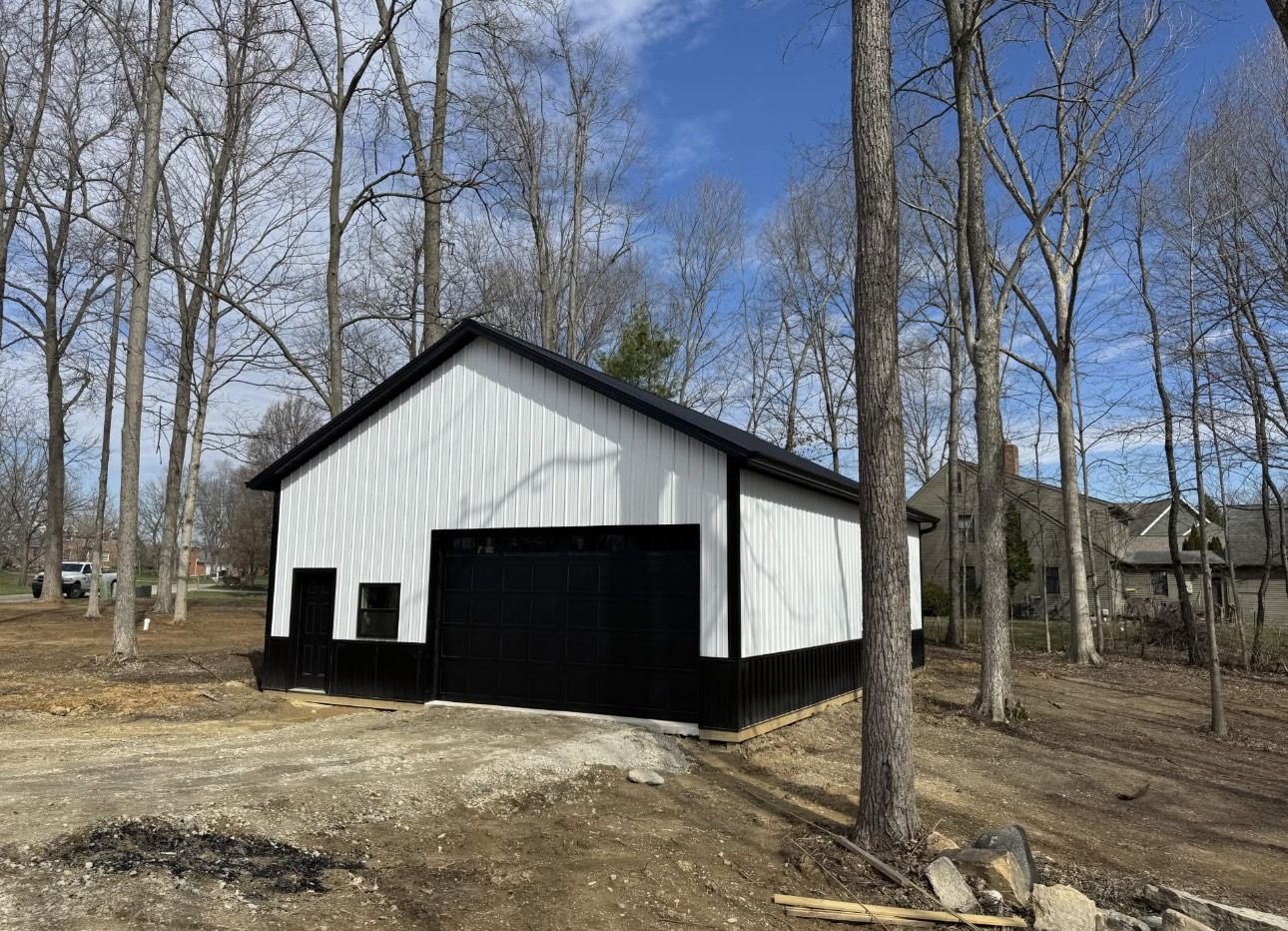
Your pole barn begins with engineered pole placement and embedment depth calculations based on soil type, building height, and expected snow loads. Poles are set at precise intervals and depths, then braced and aligned before roof trusses are installed. Trusses span the full width of the building without interior supports, and metal roofing is fastened directly to purlins that run horizontally across the truss system. This creates a weather-tight shell that resists uplift and handles snow accumulation without sagging or shifting.
Once the frame and roof are complete, you'll notice the clear floor space that makes equipment maneuvering and storage layouts possible without working around posts or load-bearing walls. Overhead clearance remains consistent throughout the building, and door openings can be sized to accommodate tractors, trailers, or hay wagons without modification. The metal roof sheds water immediately, and proper overhang prevents splash-back and ground erosion along the foundation line.
Pole barns can be left as open shells for pure storage or finished with insulation, interior walls, and utilities depending on whether the building will house livestock, serve as a workshop, or function as climate-controlled storage. The structure itself remains the same, but finishing choices affect temperature control, dust management, and long-term maintenance requirements.
Questions Before Starting Your Pole Barn Project
Clients planning pole barn construction in Ripley often ask about design options, material choices, and site requirements before breaking ground.
What size pole barn works for equipment storage and workspace?
Building dimensions depend on the number and size of vehicles or equipment you need to store, plus clearance for door swing, aisle space, and any workbench or shelving areas. A typical layout for two tractors and a utility vehicle requires at least 30 feet of width and 40 feet of depth, but custom sizing accommodates specific equipment or future expansion needs.
How does post-frame construction handle Ohio snow loads?
Engineered trusses are designed to carry the weight of snow accumulation common to the Ripley area, and metal roofing's smooth surface allows snow to slide off rather than build up. Pole embedment depth and bracing resist the lateral pressure that comes with wind-driven snow and freeze-thaw cycles that affect above-ground foundations.
What site preparation does a pole barn require?
The building site needs to be cleared, leveled, and graded for drainage away from the structure. If you're adding a concrete slab, the ground must be compacted and stable before pouring. Access for material delivery and equipment also needs to be established before construction begins.
Can pole barns include finished interior space?
Interior framing, insulation, electrical wiring, and wall finishing can be added to create workshop areas, office space, or climate-controlled storage. The post-frame shell supports these additions without structural modification.
How long does pole barn construction take from start to finish?
Timeline depends on building size, site conditions, and whether you're adding a concrete slab or interior finishes. A basic shell on a prepared site with footings typically takes less time than a fully finished building with utilities and insulation, but weather delays and material delivery affect the schedule.
Queen City Builders manages pole barn projects from initial design through final construction, handling engineering, material sourcing, and site work. Request a project estimate to review layout options and material specifications based on your intended use and site conditions.