Ground Ready for Construction or Access
Land Clearing & Site Preparation in Ripley for building sites, driveways, and access roads requiring tree removal, grading, and drainage control
Overgrown lots and ungraded land prevent foundation work, drainage management, and vehicle access until vegetation is removed and the ground is leveled. Queen City Builders clears trees, brush, and stumps from residential and commercial properties in Ripley, then grades the site to establish proper drainage and prepare stable ground for construction. You need a clean, level surface where water flows away from building locations and access routes remain passable during wet weather without rutting or erosion.
Land clearing begins with tree and brush removal using equipment sized for the density and terrain of the site. Stumps are ground below grade to prevent interference with grading or foundation work, and debris is removed from the property or processed on-site depending on disposal options and project scope. Grading follows clearing, reshaping the ground to create positive drainage away from building pads and roadways. Soil is compacted in areas where foundations, driveways, or pole barn footings will be installed, and access routes are established to allow material delivery and equipment movement without damaging surrounding areas.
Schedule a site evaluation to identify trees, drainage patterns, and access requirements before clearing and grading work begins.
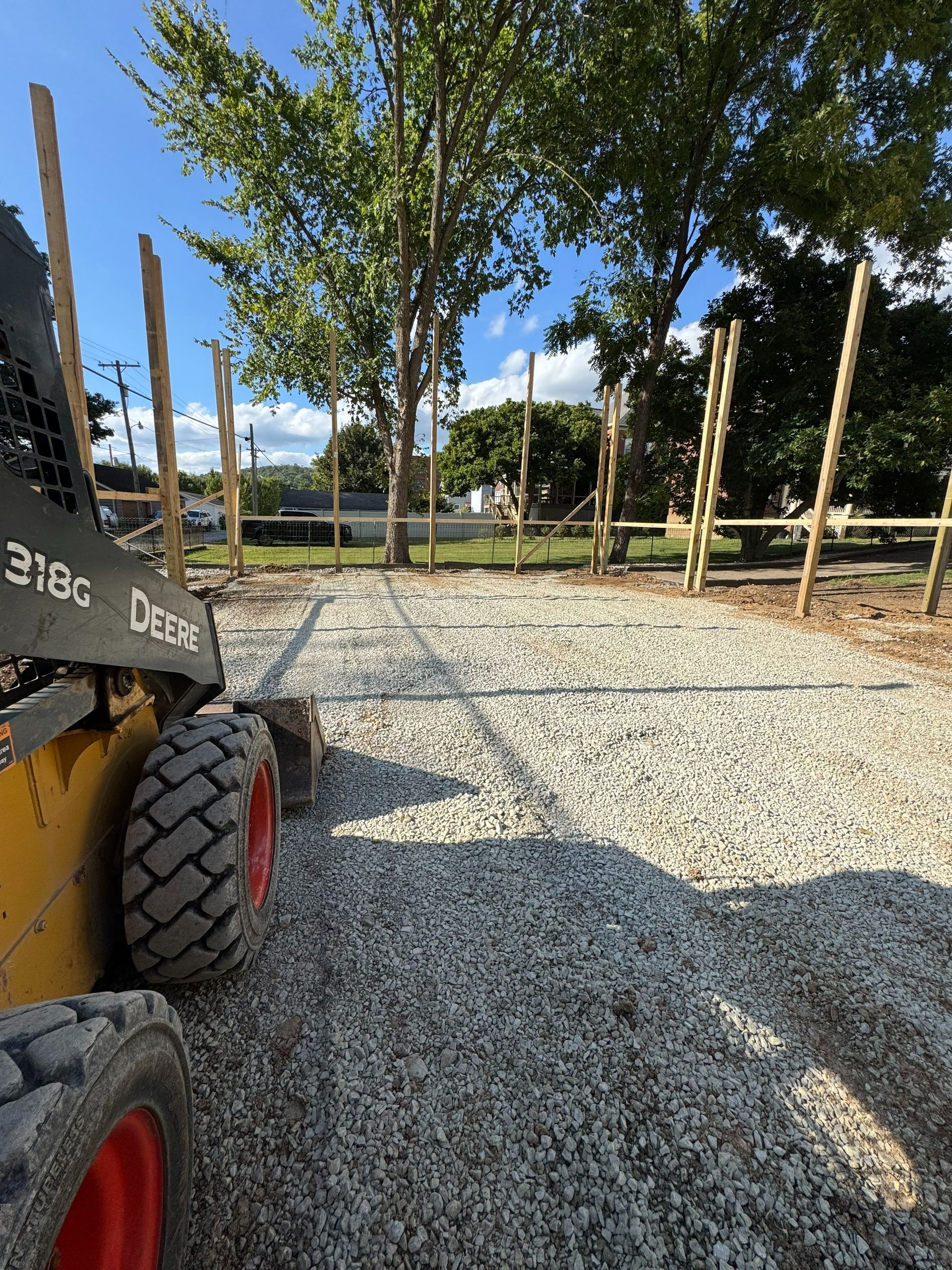
What You Notice Once Site Preparation Is Finished
Site preparation removes obstacles that block construction equipment and creates a stable, graded surface where water moves predictably instead of pooling or eroding soil. The work involves clearing vegetation, grinding stumps flush with or below ground level, and reshaping terrain to direct runoff away from building locations. Grading may include adding fill material to low areas or removing soil from high spots to achieve consistent elevation and slope.
After grading is complete, you'll see a cleared footprint where building layout can be marked and foundation work can begin without working around roots, stumps, or uneven ground. Water no longer collects in low spots during rain, and access routes remain firm enough for delivery trucks and equipment to navigate without sinking or creating ruts. The site is ready for concrete work, utility installation, or building construction without additional clearing or regrading.
Clearing practices account for soil erosion control and existing vegetation that should remain untouched, such as boundary trees or specimen plantings. Stump grinding depth depends on whether the area will be paved, graded for lawn, or used as a building pad, and debris removal includes hauling away wood waste unless the client prefers to retain it for firewood or mulch.
Answers to Frequent Service Questions
Property owners in Ripley preparing land for construction or access improvements often ask about clearing methods, grading requirements, and how drainage is managed on sloped or wooded sites.
What equipment is used for land clearing?
Tree removal and brush clearing use skid steers, excavators, or forestry mulchers depending on vegetation density and terrain accessibility. Stump grinding equipment removes roots below grade, and grading work requires bulldozers or graders to reshape soil and establish proper slope.
How is drainage addressed during site preparation?
Grading establishes slope that directs water away from building pads and toward natural drainage paths or installed culverts. Low areas may require fill material to prevent standing water, and swales or ditches are cut to manage runoff during heavy rain common to the Ripley area.
What happens to trees and debris after clearing?
Debris is hauled off-site for disposal or processing, or it can be stacked on the property if you want to retain firewood or mulch material. Brush and small branches are typically chipped or removed entirely to leave a clean site.
Can clearing and grading happen on sloped land?
Slopes require careful grading to prevent erosion and maintain stable access routes. Excavation may be needed to create level building pads, and retaining structures or drainage measures are sometimes required to manage runoff and soil stability on steep terrain.
How much clearing is required before building construction starts?
The cleared area must include the building footprint plus space for equipment access, material staging, and excavation spoils. Access roads or driveways also need to be cleared and graded to allow delivery trucks to reach the site without damaging surrounding areas or getting stuck in soft ground.
Queen City Builders coordinates land clearing and site preparation with building timelines to keep projects on schedule and avoid unnecessary site disturbance. Request a site assessment to review clearing scope, grading needs, and drainage solutions based on your property's terrain and intended use.